For a long time, the way we described the place where work happened was simple. You either worked at the office, or you worked from home. The lines were clear. In the current year, however, those lines have blurred significantly. Most organizations now support a hybrid workforce, and many employees split their time between the corporate office and other locations throughout the week.
This shift presents a unique design challenge. How do you create an environment that serves the employee who is in the office three days a week and also needs to seamlessly connect with colleagues who are elsewhere? And how do you ensure that the in-office experience is productive, flexible, and worth the commute?
At COREoi, we believe the answer lies in making smart, purposeful design decisions. Here is how we are helping clients approach the design of spaces that truly work for a hybrid workforce.
Start with the "Why" of Coming In
The first step in designing for hybrid workers is acknowledging that for many, the office is now a choice. Coming into the office is often a decision based on perceived value, rather than it being a requirement.
If an employee is going to spend time and energy commuting, the office needs to offer something their home office cannot. This usually falls into three categories: Collaboration, Community, and Resources.
- Collaboration: Is there something an employee can do with their team that is easier to do in the office? Certain employees prefer a hands-on brainstorming session in the project room instead of having an online conference call.
- Community: Are there employees who need social interaction and mentorship that happens organically? Do they crave the simple feeling of being part of a team?
- Resources: Do some of your employees need access to specialized equipment or private offices for confidential calls? Or do they simply require a change of scenery?
If your office is designed primarily for individual, heads-down work, you may struggle to make it the destination your employees will choose to work in. If it is designed for connection and creativity, however, you create a magnetic pull that brings your hybrid teams together.
Solving for the "Hybrid Meeting" Dynamic
Perhaps the biggest design challenge of a hybrid workforce is the meeting room itself. When half your team is in the room and half is joining from somewhere else, the traditional conference room setup tends to fall short. We have all been on “that” call – the one where three people are huddled around a table looking at a tiny laptop camera, while the participants on screen struggle to hear the discussion and feel completely left out.
You can solve this by practicing better design philosophies. We are moving away from the long, boardroom tables that put distance between people. Instead, we are specifying:
- Huddle layouts that bring people closer to the camera.
- High-quality audio/video integration that can pick up the person whispering at the far end of the table, and not just the loudest speaker.
- Dual screens so remote participants are life-size, not postage-stamp sized, allowing in-room employees to see them as clearly as they see the person next to them.
When the technology is invisible and integrated, the hybrid worker in the office can collaborate effectively with their colleagues elsewhere, creating a seamless experience for everyone.
Creating a Menu of Spaces, Not Just a Desk
The old office model was simple: every employee got a dedicated desk. But hybrid workers have varied needs depending on the day. On Monday, they may need focus time. On Wednesday, they may be leading a team workshop. On Friday, they may have back-to-back video calls.
We are helping clients design “activity-based” environments that offer a variety of options that compliment these tasks:
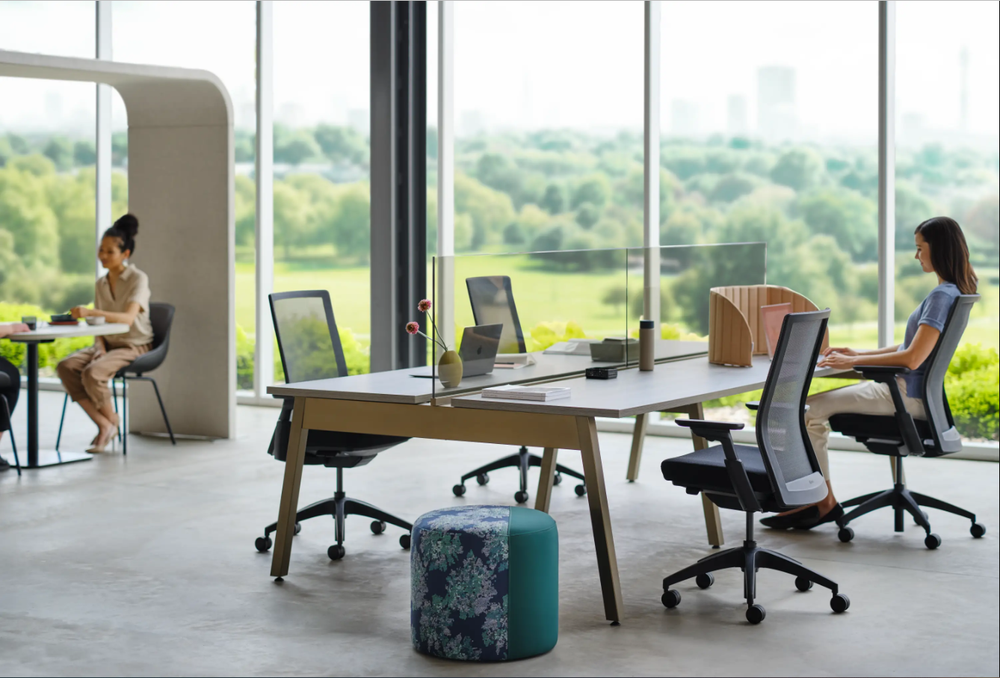
- Quiet Zones: Designated areas with phone booths or sound masking capabilities for hybrid workers who come to the office specifically to focus without distractions.
- Collaborative Hubs: Open areas with movable furniture and writable walls for teams to spread out and work together.
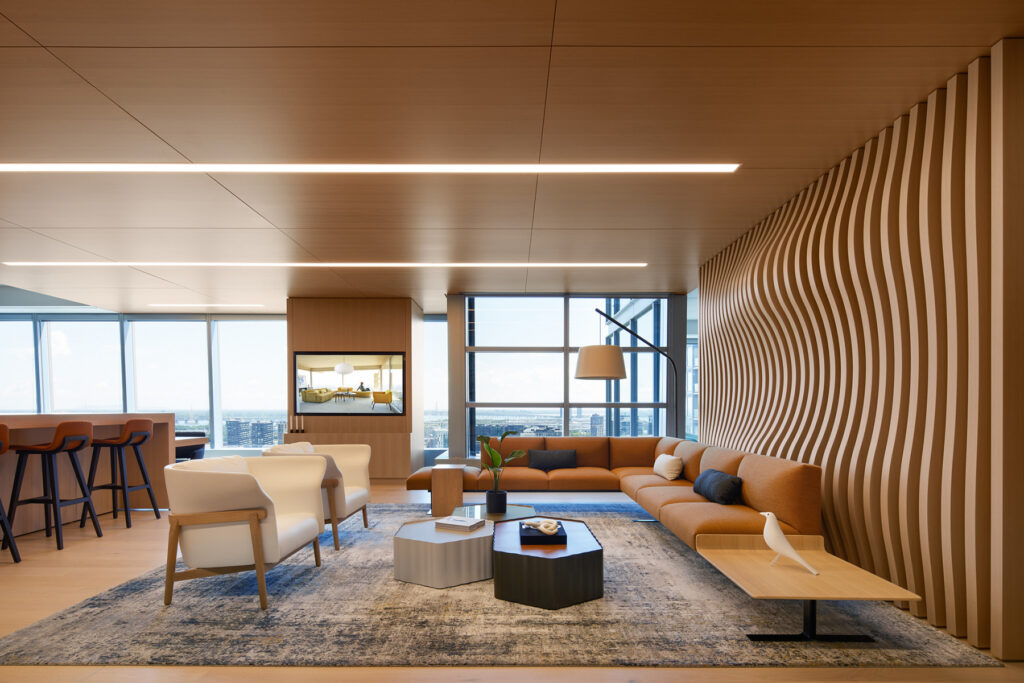
- Social Anchors: Break areas and cafes designed to encourage the informal conversations that build culture. If you want people to stay and connect, you need to give them a comfortable place to do it.
- Reservable Focus Rooms: Smart spaces that can be booked online by a hybrid worker who needs a private space for a few hours between meetings.
- Video-Conferencing Ready Spaces: Smaller rooms designed specifically for the hybrid worker who needs to take a call or host a meeting with remote colleagues.
This variety ensures that whether a hybrid employee is in the office for a single afternoon or a full week, they have the right tool for the job.
Designing for Flexibility
Ultimately, designing for hybrid workers means embracing flexibility. The office can no longer be a static environment. It must be agile, adapting to the ebb and flow of who is in the building on any given day.
This requires a shift in mindset. The physical office is no longer the only workplace, but it is the hub; the place where culture is built, relationships are strengthened, and collaboration happens best. By designing spaces that are intentional, flexible, and technologically equipped, you make the office a place your hybrid team wants to be.
At COREoi, we specialize in helping organizations navigate this transition. Whether you are refreshing a single floor or reimagining your entire corporate campus, we can help you create a space that compliments the way your employees go about their work.